Sandia CAMINO Cuts Development-Part Lead Time from Months to One Week
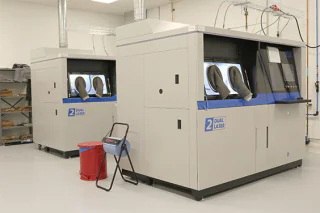
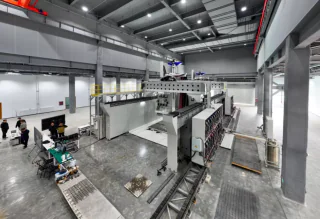
Sandia National Laboratories' CAMINO delivered additive-manufactured development parts in one week instead of the four to six months required for machining.
3D Printing Industry
Sandia National Laboratories' CAMINO delivered additive-manufactured development parts in one week instead of the four to six months required for machining.
Nike placed computationally tuned, delta-shaped 3D-printed vortex generators across Keely Hodgkinson's shoulders, thighs, torso, and hood.
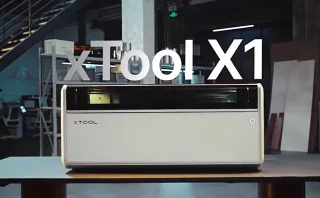
xTool has launched the modular X1 laser platform with a surface-working area up to 615 × 320 mm and claimed galvo speeds up to 6,000 mm/s.
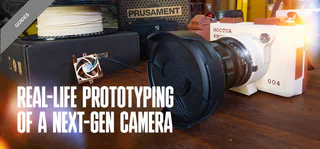
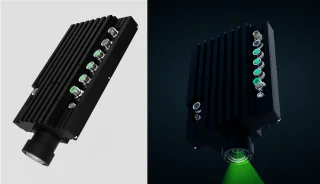
The camera prototype combines 4K60 processing and cryptographic signing with a printed enclosure and integrated cooling duct, targeting a small production batch in 2027.
Materialise reported Q3 2026 revenue of €67.67 million, up 2.1%, with Medical revenue rising 9.7% while net profit declined to €1.38 million.
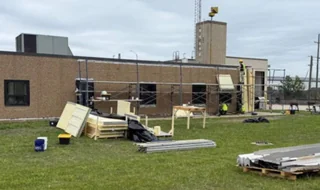
The U.S. Army is piloting 3D-printed exterior overcladding for an existing building at Detroit Arsenal.
Hisun Biomaterials reported RMB 953.34 million in revenue and RMB 27.45 million in attributable net profit for the first nine months of 2026, citing demand for 3D printing materials.
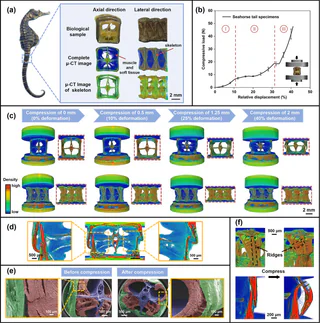
HUST used PolyJet printing to reproduce the soft-hard interlocking mechanism of a seahorse tail in a flexible exoskeleton structure.
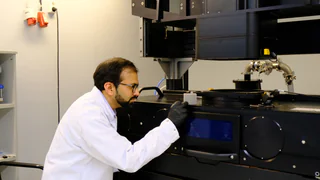
The University of Turku has integrated a Schaeffler Aerosint SPD2.1-B5 recoater with an Aconity MIDI+, enabling research with up to three powders selectively deposited within one layer.
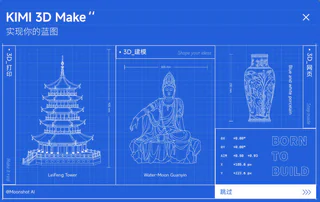
Moonshot AI launched Kimi K3.1 Pro and 3D Make for creating 3D models from text, sketches, or reference images and exporting them for printing.
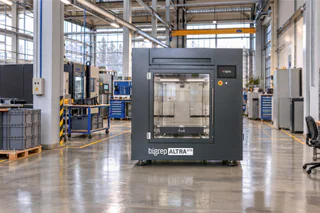
BigRep has introduced the ALTRA 670 with a 1,200 × 700 × 800 mm build volume, dual 450°C extruders, and a 140°C chamber and bed.
Phase3D has introduced new Fringe Inspection hardware that uses structured light to measure LPBF build-surface height layer by layer, integrating projection, computing, and storage.
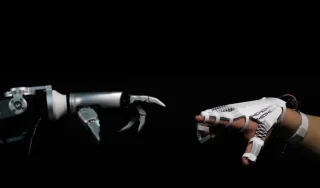
The design software separates conductive sensing and trace materials to capture deformation along as many as three axes.
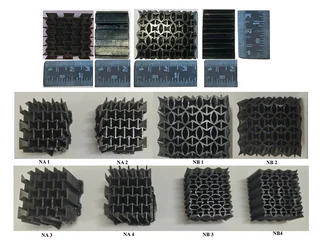
VIT compared star-triangular and re-entrant hexagonal lattices under the same conditions; the best star specimen reached about 2,700 N.
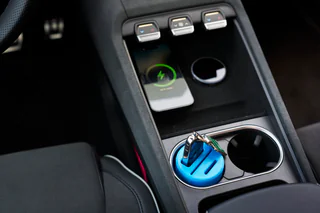
Škoda Auto has released free 3D-printable interior accessories for current and discontinued models through Printables, including cupholders and storage parts for home fabrication.
Meshy released an official Hermes Agent plugin covering conversational 3D generation, repair, scaling, and 3MF export.
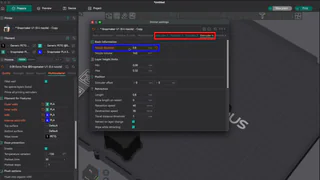
A published workflow assigns a 0.4 mm nozzle to walls and a 0.8 mm nozzle to infill, using percentage-based line widths for mixed heads.
Jingye Future Intelligent Manufacturing plans a RMB 5 billion base with 20 powder lines, 400 metal 3D printers and 100 MIM lines.
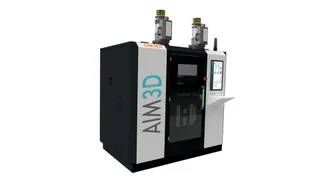
AIM3D has announced an aerospace-process configuration of its pellet-fed ExAM A 510 for ULTEM 9085, developed with AM-MRO. Numerical test results, applicable standards and the scope of any aviation-authority approval were not disclosed.
StandardFlow has launched an AI-assisted platform that maps engineering documents to standards requirements and flags missing evidence or contradictions. Its launch demonstration used synthetic documents for a fictional project, and the tool does not replace certification or final engineering approval.
Metal-powder producer 6K Additive reported Q3 2026 revenue of $7.2 million, up 61% year over year, while backlog rose 52% quarter over quarter to $18.1 million.
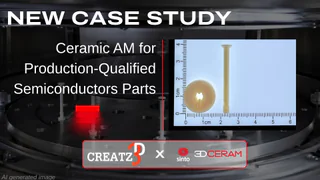
Singapore-based Creatz3D produced and delivered 600 sets of alumina lift pins for semiconductor equipment using 3DCERAM SINTO ceramic AM technology. The companies report that the full production cycle took six weeks.
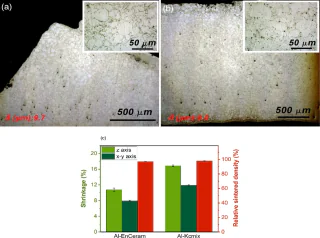
An Empa-led team densified material-extrusion-printed AA6061 to 97.9% relative density using solvent-free wick debinding and an extended sintering hold. Mechanical properties were not evaluated, so the result remains a process-development study.
A Beijing Institute of Technology-led team reports in Nature that pulsed alternating heat inputs enabled meter-scale Ti-6Al-4V single crystals by additive manufacturing. The peer-reviewed result should be distinguished from the related startup's claims about scaling the process further.