BIT-Led Team Additively Manufactures Meter-Scale Ti-6Al-4V Single Crystals
A Beijing Institute of Technology-led team reports in Nature that pulsed alternating heat inputs enabled meter-scale Ti-6Al-4V single crystals by additive manufacturing. The peer-reviewed result should be distinguished from the related startup's claims about scaling the process further.
Researchers from Beijing Institute of Technology, Tsinghua University, UCLA and partner institutions published “Additive manufacturing of ultralong and architected single crystals” in Nature on October 21, 2026. The team combined a mechanics–solidification model with a printable phase diagram and applied pulsed alternating heat inputs to stabilize single-crystal growth.
The peer-reviewed work demonstrates meter-tall, centimeter-diameter Ti-6Al-4V single crystals and architected lattice rods, including suspended features, grown from a polycrystalline substrate without a seed crystal, mold or additional support. The approach was also extended to tungsten, molybdenum, niobium and a MoNb alloy. The paper reports substantially better creep resistance in the Ti-6Al-4V samples than in forged and additively manufactured polycrystalline comparators.
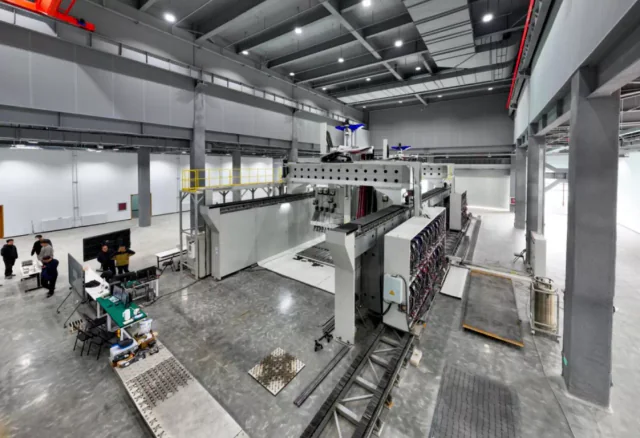
Nanjixiong separately reports that Juxing Zhizao, a startup spun out of the team, raised tens of millions of yuan in angel funding. Claims about a 20-meter-class system, 100-meter-class components, and reductions in cost or lead time come from the company and are not demonstrations in the Nature paper. Certifications are also described as ongoing, so production-scale performance remains to be independently verified.
Key facts
- The Nature article was published on October 21, 2026.
- The team produced meter-tall, centimeter-diameter Ti-6Al-4V single crystals.
- The process did not use a seed crystal, mold or additional support.
- The method was also applied to tungsten, molybdenum, niobium and MoNb alloy.
Context
Combining very long single crystals with designed geometries could open a new route for high-temperature, high-load components, but the transition from research specimens to very large production parts remains unproven.