Empa-Led Team Reaches 97.9% Density in MEX-Printed AA6061 Without Solvent Debinding
An Empa-led team densified material-extrusion-printed AA6061 to 97.9% relative density using solvent-free wick debinding and an extended sintering hold. Mechanical properties were not evaluated, so the result remains a process-development study.
Researchers from Empa, AGH University of Krakow, and the University of Applied Sciences and Arts Northwestern Switzerland investigated debinding and sintering conditions for AA6061 powder combined with commercial thermoplastic binders in material extrusion additive manufacturing. The peer-reviewed paper appeared in Progress in Additive Manufacturing on October 15, 2026; 3D Printing Industry reported it on October 26.
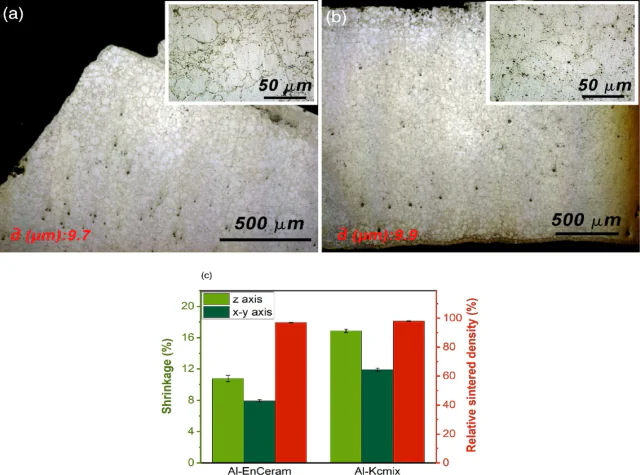
The team printed 20 mm-diameter, 3 mm-high discs containing 60 vol.% AA6061 powder on a Tumaker Voladora NX+. Instead of solvent debinding, the parts were embedded in a porous alumina powder bed for 24 hours of wick debinding at 350°C, then sintered at 635°C in nitrogen. The Kcmix formulation reached 96.7% relative density after a two-hour hold and 97.9% after ten hours; EnCeram reached 96.8% after ten hours.
Conventional routes using water or high-purity acetone produced surface oxidation and incomplete edge densification. The best result still required 24 hours of debinding and ten hours of sintering, and the study measured density and microstructure rather than mechanical performance. Strength, fatigue behavior, and industrial repeatability therefore remain unverified.
Key facts
- The peer-reviewed paper was published on October 15, 2026.
- The feedstocks contained 60 vol.% AA6061 powder.
- Parts underwent 24 hours of wick debinding at 350°C followed by sintering at 635°C in nitrogen.
- The Kcmix formulation reached 97.9% relative density after a ten-hour sintering hold.
- Mechanical properties were not evaluated.
Context
The work suggests a solvent-free route for reactive aluminum feedstocks, but lengthy thermal processing and the absence of mechanical-property data remain barriers to industrial use.