MIT and Tianjin University Develop X-Hinges for Self-Sensing Prints
The design software separates conductive sensing and trace materials to capture deformation along as many as three axes.
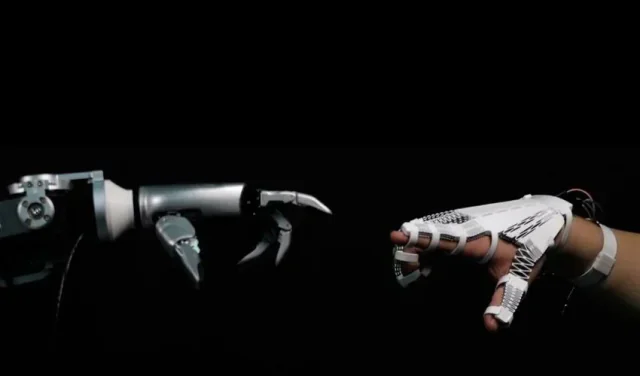
Researchers at MIT CSAIL and Tianjin University have developed X-Hinges, software for designing and 3D printing self-sensing compliant mechanisms. After users specify geometry and motion, the tool automatically places conductive sensing material separately from wire-like traces, capturing compression, vertical and lateral deformation across as many as three axes.
Demonstrations include a glove that teaches grasping motions to a robot hand, an origami lamp that changes brightness when folded, and a platform that identifies placed objects from tactile data. A key limitation is calibration: nominally identical prints can produce different readings because electrical elements shift slightly. The team used image-based recalibration, but built-in automatic calibration remains future work.
Key facts
- Separate materials are used for sensors and traces to reduce signal interference
- Designs can combine compression, vertical and lateral motion across up to three axes
- Per-print calibration remains a current limitation
Context
Automating embedded sensing could simplify prototypes for robot teaching and tactile interfaces without attaching sensors after printing.