DIII-D Tests Full-Size 3D-Printed Tungsten Divertor Tiles
NC State, ORNL and JEOL installed full-size EB-PBF tungsten divertor tiles in DIII-D. The tiles showed no visible damage after 74 H-mode discharges, while detailed surface analysis continues.
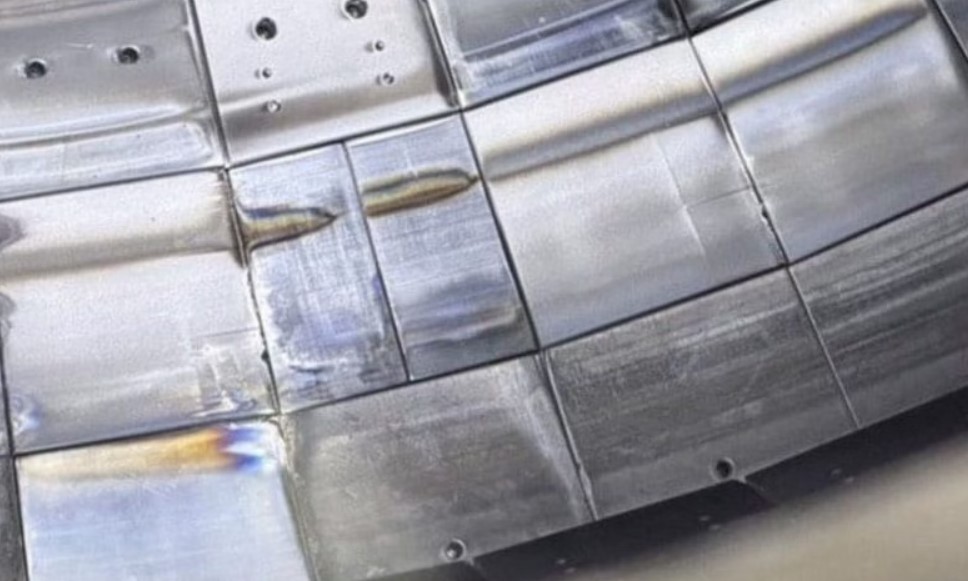
NC State, Oak Ridge National Laboratory and JEOL have moved electron-beam powder bed fusion (EB-PBF) tungsten into a full-size tokamak component test. The team printed a pair of divertor tiles measuring 136 × 143 × 20 mm on a JEOL JAM-5200EBM, then NC State finished them by wire EDM and multi-axis CNC grinding, removing roughly 250 µm from the plasma-facing surface.
Installed in DIII-D's lower divertor in July 2026, the tiles saw 74 medium- and high-power H-mode discharges across three days, for about four minutes of direct plasma exposure. The team reported no visible damage when they were removed. Imaging and surface metrology are still underway, so the campaign is component-scale evidence, not yet a qualification of erosion resistance or service life.
Key facts
- The tile pair measures 136 × 143 × 20 mm
- The campaign covered 74 H-mode discharges over three days and about four minutes of plasma exposure
- The parts were EB-PBF printed on a JEOL JAM-5200EBM and finished by wire EDM and multi-axis CNC grinding
Context
The campaign advances additively manufactured tungsten from coupons to component-scale tokamak exposure, but erosion and service-life performance still require analysis.