Pollen AM and RHEON report 30% lighter helmet padding with pellet 3D printing
Pollen AM and RHEON Labs report that Pam Pro parts made from RHEON P3D 001 were 30% lighter than injection-moulded counterparts while matching or exceeding damping performance. The result is a company case study, not certification or a production award.
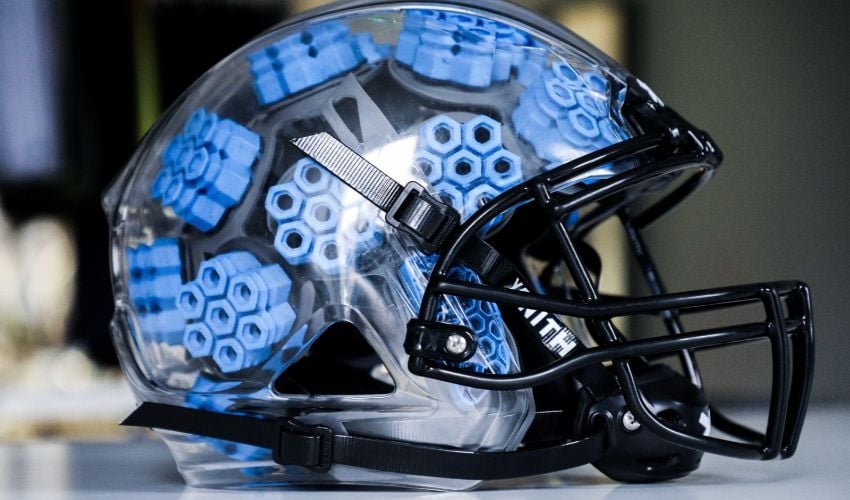
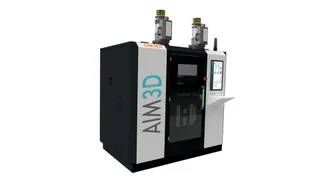
France’s Pollen AM and UK-based RHEON Labs used a Pam Pro pellet printer to process the RHEON P3D 001 protective elastomer into padding components for a Xenith Shadow XR helmet. The work was reported by 3Dnatives and in the companies’ case study.
In their comparison, the printed parts were 30% lighter than injection-moulded equivalents while delivering equal or better damping. The companies position the strain-rate-sensitive material and tool-free production as a way to make complex protective geometries directly.
The figures come from a company test and case study. They do not demonstrate third-party certification, approval by a sports governing body or a mass-production supply contract. Standards-based impact tests, durability and process repeatability would still need to be established for deployment.
Key facts
- The material was RHEON P3D 001
- The machine was a Pollen AM Pam Pro
- Company testing reported 30% lower weight than injection-moulded parts
Context
The approach could enable lighter, geometry-optimised protective parts without tooling for low-volume development.