Researchers SLS-print fillable lung phantom with simulated pulmonary embolism
University Hospital of Brest researchers produced a 14.3 × 24.1 × 10.4 cm Nylon 12 lung phantom with a separately fillable embolism compartment and evaluated it across CT and nuclear imaging.
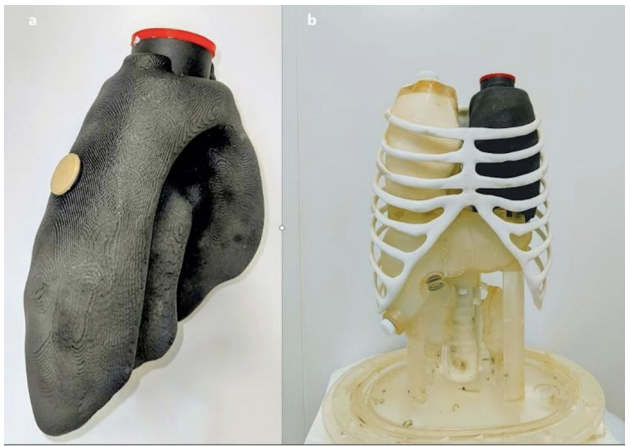
Researchers at University Hospital of Brest produced a fillable left-lung phantom with a simulated pulmonary embolism as one SLS part on a Formlabs Fuse 1+. The Nylon 12 model measures 14.3 × 24.1 × 10.4 cm, used 0.110 mm layers and took 17 hours to print.
Two screw plugs allow the healthy lung and embolism compartment to be filled separately. The embolism compartment occupied 7.6% of internal volume versus a 5% design target. On nuclear images, two readers estimated obstruction at about 5%, consistent with the simulated defect.
The nylon wall was clearly visible on CT, preventing CT-based obstruction-index calculation. Other limitations include a single lung segment, one-axis breathing at fixed volume and uneven bead/tracer distribution. This is a research reference phantom, not evidence of medical-device approval.
Key facts
- Dimensions: 14.3 × 24.1 × 10.4 cm
- Material: Nylon 12
- Layer thickness: 0.110 mm
- Print time: 17 hours
- Embolism compartment: 7.6% of internal volume (5% target)
Context
The phantom establishes a shared physical reference for CT and nuclear imaging while exposing material and design issues, including wall visibility.