LLNL cuts NIF microcomponent production from ten days to one with 2PP
LLNL now prints compound parabolic concentrators for NIF targets as single pieces using two-photon polymerization, cutting production from ten days to one; an April 2026 test matched conventional performance.
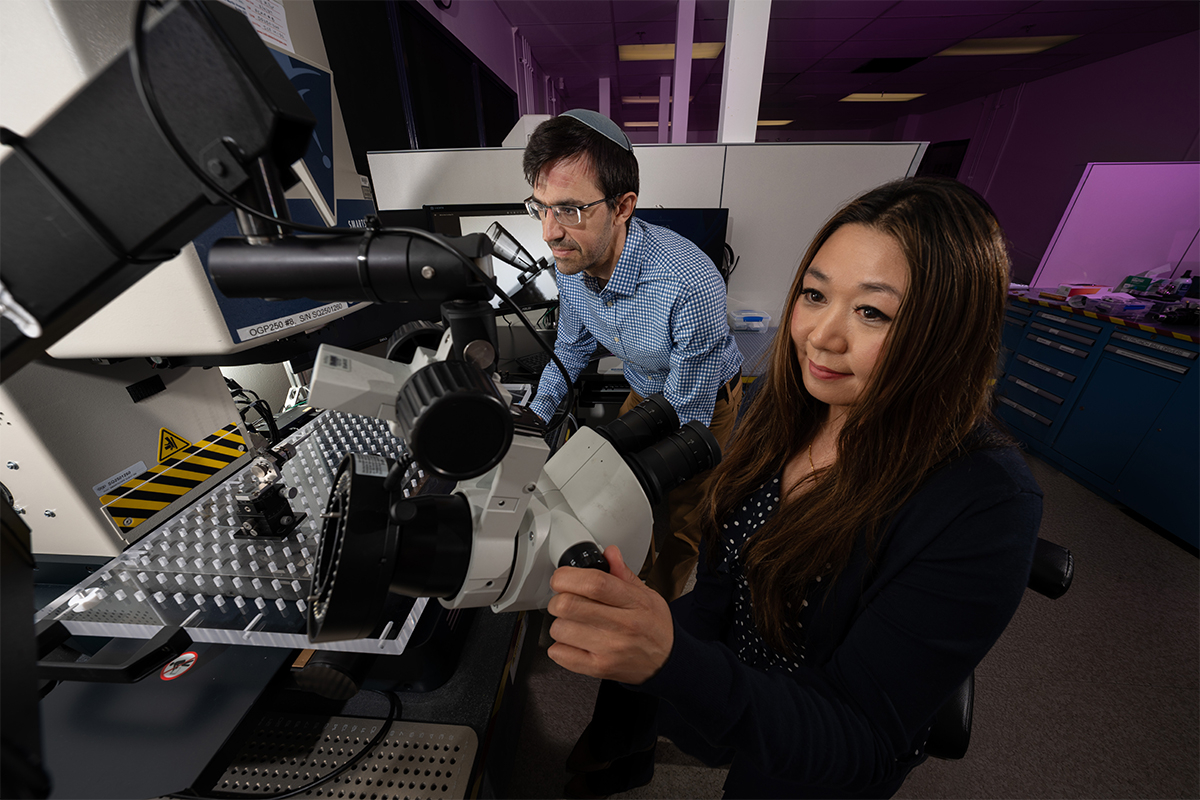
Lawrence Livermore National Laboratory (LLNL) is producing compound parabolic concentrators (CPCs) for National Ignition Facility targets as single pieces by two-photon polymerization (2PP), reducing fabrication time from ten days to one. The CPC is about 1.5 mm long, with a 20 μm narrow end.
The conventional route required diamond-turning a copper mandrel, gold and polymer coating, further machining, mandrel dissolution and assembly. Using a sub-micron focal spot, 2PP produces a one-piece component that does not require gold coating. LLNL reports that an April 2026 diagnostic-calibration test performed as well as conventionally manufactured components.
The part was incorporated into a September 2026 NIF ion-fast-ignition target, with data analysis ongoing. Because these components are used in high-energy-density experiments, pre-testing at other facilities and strict checks on back-reflection and surface roughness remain necessary.
Key facts
- CPC size: about 1.5 mm
- Narrow-end diameter: 20 μm
- Fabrication time: ten days to one
- Process: two-photon polymerization (2PP)
- April 2026 test: matched conventional performance
Context
This is an operational example of replacing a multistep microfabrication route with single-piece printing to increase speed and geometric freedom.