RMIT Prototypes Biodegradable 3D Printing Material From Coffee Waste
RMIT University researchers developed a biodegradable filament based on spent coffee grounds and printed a full-scale architectural demonstrator. The project remains at research stage, with no published quantitative acoustic, insulation, or long-term building-performance data.
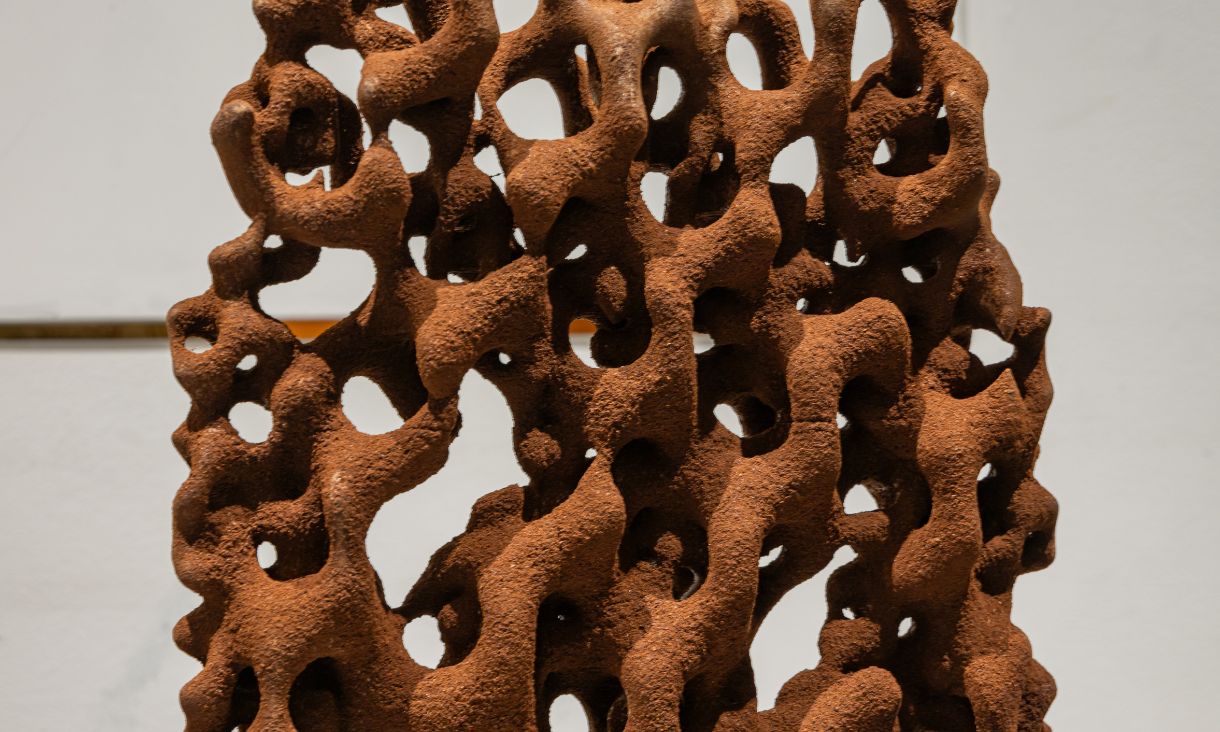
3D Printing Industry reported on November 2, 2026, on RMIT University’s Waste to Form project. A team led by Professor Baohua Jia and Dr Nic Bao developed a biodegradable printing material based on locally collected spent coffee grounds and assembled printed modules into a full-scale spatial demonstrator shown at Melbourne Design Week.
The materials team developed and characterized the formulation, while the FormX Research Lab handled computational design and larger-scale fabrication. RMIT says the coffee grounds increased strength and may add color, scent, acoustic absorption, and insulation functions. Quantified acoustic and thermal-performance data have not yet been published.
This is a research demonstrator, not a certified building material. Long-term durability, fire performance, production cost, and structural approval remain unestablished. Its current significance is the conversion of a common waste stream into a printable material whose geometry, texture, and porosity can be designed together.
Key facts
- The team developed a biodegradable printing material based on spent coffee grounds.
- Printed modules were assembled into a full-scale spatial demonstrator shown at Melbourne Design Week.
- Quantified acoustic and thermal data, long-term durability, and building certification have not been published.
Context
The project links waste-derived materials with computational architectural design, but practical adoption will require quantified performance, durability, and safety testing.