SYZMIK and Carbon put a 10 mm printed lattice pad into the X7C+ headband
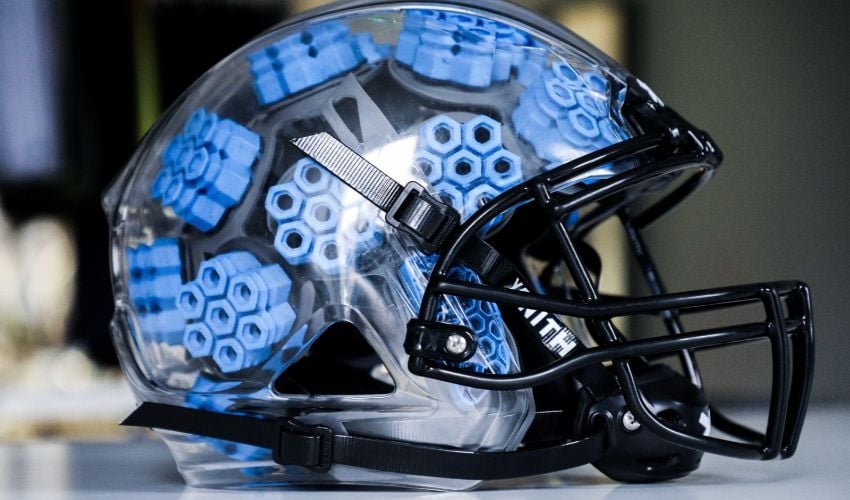
SYZMIK Sports uses a Carbon EPU 45 lattice in its X7C+ protective headband. The Virginia Tech rating models acceleration under specified impacts; it does not directly measure injury reduction in play.
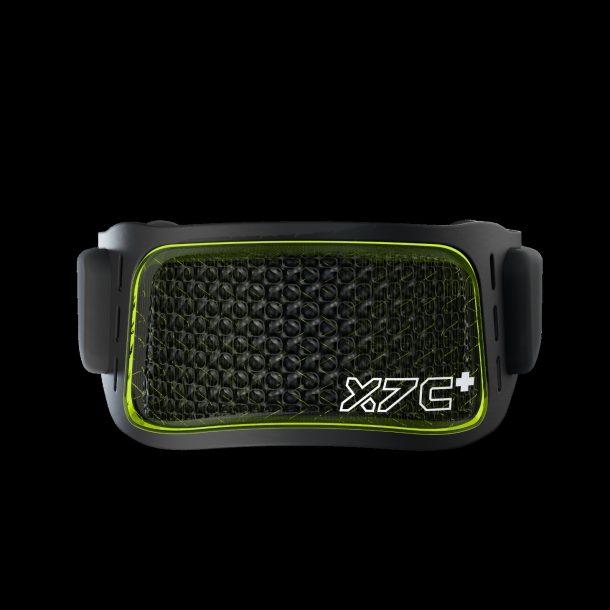
SYZMIK Sports worked with Carbon to replace the EVA foam in its X7C+ flag-football headband with a 3D-printed lattice. Within a thickness limit of about 10 mm, the team tuned lattice density around Carbon’s strain-rate-sensitive EPU 45 elastomer.
Development took roughly one year. Virginia Tech testing measured linear and rotational acceleration across 36 laboratory impacts, and the product carries a 5-Star rating. That score is a model under specified conditions, not a direct count of injuries prevented in competition.
According to independent reporting by 3D Printing Industry, the printed part costs more than foam, while unit cost, production volume and yield were not disclosed. Tool-free iteration was central to the decision; some comfort and protection claims remain manufacturer statements.
Key facts
- The lattice uses Carbon EPU 45
- Pad thickness is about 10 mm
- Virginia Tech’s method uses 36 laboratory impacts
Context
The product is a consumer-AM case where tunability and tool-free iteration took priority over unit cost.