OrcaSlicer 2.5.2 fixes STEP imports, arrangement and multinozzle slicing
A maintenance release after 2.5.1 adds per-filament prime volume for Type 1 towers and fixes missing STEP faces and Wayland freezes. CORE One and Snapmaker U1 profiles also change.
The OrcaSlicer team published stable version 2.5.2 on November 21. This maintenance update builds on 2.5.1 and addresses slicing crashes, STEP imports and failures to arrange parts that nearly fill the bed.
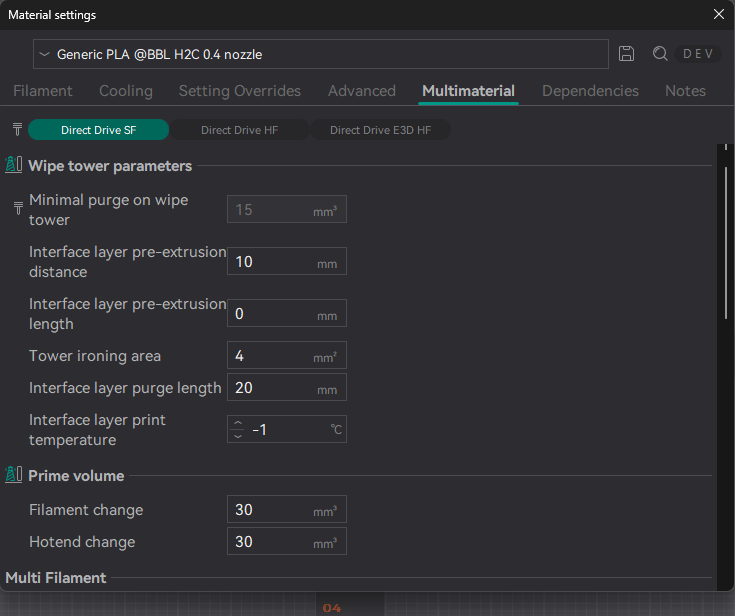
Printers using a Type 1 prime tower gain a Prime volume group in each filament’s settings. Filament-change purging can be adjusted per material, while printers with multiple nozzles in an extruder, such as H2C, also expose hotend-change volume. Type 2 towers are unchanged, and existing projects slice as before until values are changed.
The release repairs missing faces in some STEP files imported since 2.5.0. It also addresses ARM64 mesh repair joining unrelated edges. Other fixes cover near-bed-size arrangement and incorrect circle or angle detection on nonuniformly scaled objects.
Prusa CORE One profiles receive corrected overhang-speed assignments. Snapmaker U1 profiles apply stricter rod-clearance checks when printing by object: Height to rod changes from 27.5 to 26 mm, and Distance to rod becomes 41.2 mm. These are corrections to existing profiles, not newly added printer support.
Release summary
- Per-filament prime volume is available for Type 1 prime towers.
- Fixes cover missing STEP faces, slicing crashes and near-bed-size arrangement.
- Linux AppImage addresses Wayland freezes; Flatpak retains its rendering path.
- CORE One overhang speeds and U1 rod-clearance profiles are corrected.
- Downloads are provided for Windows, macOS and Linux.
Context
U1 users printing by object may find that a previously accepted arrangement is rejected by the stricter clearance check. Review the relevant profile and sliced result after updating. This brief summarizes the official release notes.