$450 Ender 3 bioprinter produces living structures over 100 layers
Researchers at Rochester and Cornell converted an Ender 3 into a syringe-based bioprinter that produced bacteria-containing living materials more than 100 layers tall in support slurries.
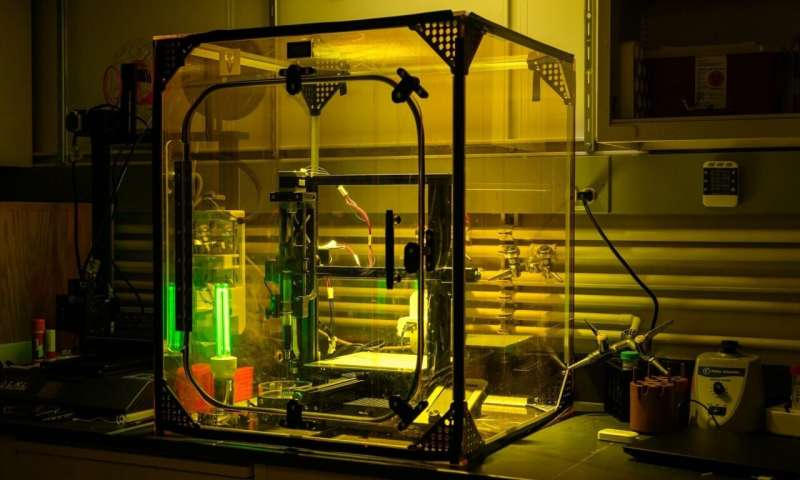
A University of Rochester and Cornell team built an open-source bioprinter by removing the filament extruder and heater from a Creality Ender 3 and replacing them with a lightweight syringe pump. The reported build cost is about $450. Bio-ink is deposited into a support slurry, while syringe retraction reduces unwanted material during travel moves.
The peer-reviewed ACS Applied Polymer Materials paper reports structures taller than 100 layers, aspect ratios above 8:1 and features as small as 260 µm. With nutrient supplementation, bacteria in the prints remained viable for at least 28 days. These are bacteria-containing engineered living materials, not printed human organs or clinical tissue. Nanjixiong's report summarizes the university release and the published study.
Key facts
- A Creality Ender 3 was converted with a syringe pump
- The reported build cost is about $450
- The study reports over 100 layers, aspect ratios above 8:1 and 260 µm features
- Bacteria remained viable for at least 28 days with nutrients
Context
The platform could lower the entry cost for research bioprinting, but its demonstrated performance is limited to bacterial materials printed in support slurries.