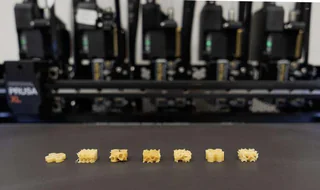
ETH Zurich 3D Prints Biocement Structures with Bacteria-Bound Sand
ETH Zurich researchers developed an architectural biocement process that prints a bacteria-bearing hydrogel and solidifies sand through calcium carbonate precipitation.
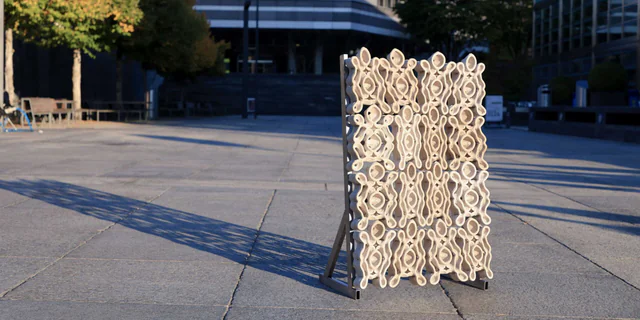
Karen Antorveza Paez and colleagues at ETH Zurich have adapted microbially induced calcium carbonate precipitation (MICP) to 3D fabrication. Reported by 3DPrint.com on October 20, 2026, the method uses Sporosarcina pasteurii in a shear-thinning hydrogel based on alginate and xanthan. The bacteria precipitate calcium carbonate that binds sand particles.
After printing, the object is placed in a urea and calcium chloride bath. Calcium crosslinks the alginate to stabilize the form, then bacterial metabolism precipitates calcium carbonate. Treatment takes two to five days, and the bacteria become inactive after drying. The team sees printing as a route to architectural elements and robotic spraying as a method for surfaces.
This is research, not a commercial building-material launch. Mechanical properties, bonding and reliable deposition remain challenges for the spraying route, while ammonium byproduct capture and safe handling of calcium chloride also need attention. ETH Zurich says the material is currently closer to mortar than concrete, with durability and load-bearing use still open research questions.
Key facts
- The printed hydrogel contains Sporosarcina pasteurii and is based on alginate and xanthan.
- A urea and calcium chloride bath enables calcium carbonate precipitation that binds sand.
- Treatment takes two to five days; drying leaves the bacteria inactive.
- The team is studying printing for architectural elements and robotic spraying for surfaces.
Context
A low-temperature biological route to binding sand could expand architectural fabrication, but structural performance, durability, byproduct handling and cost must be validated.