China's VMP Targets 50% Exports as Metal Powder Capacity Expands
Jiangsu Vilory Advanced Materials (VMP) is expanding metal powder capacity and aims to raise exports from about 10% to 50% within five years, with qualification and repeatable quality presenting larger hurdles than headline price.
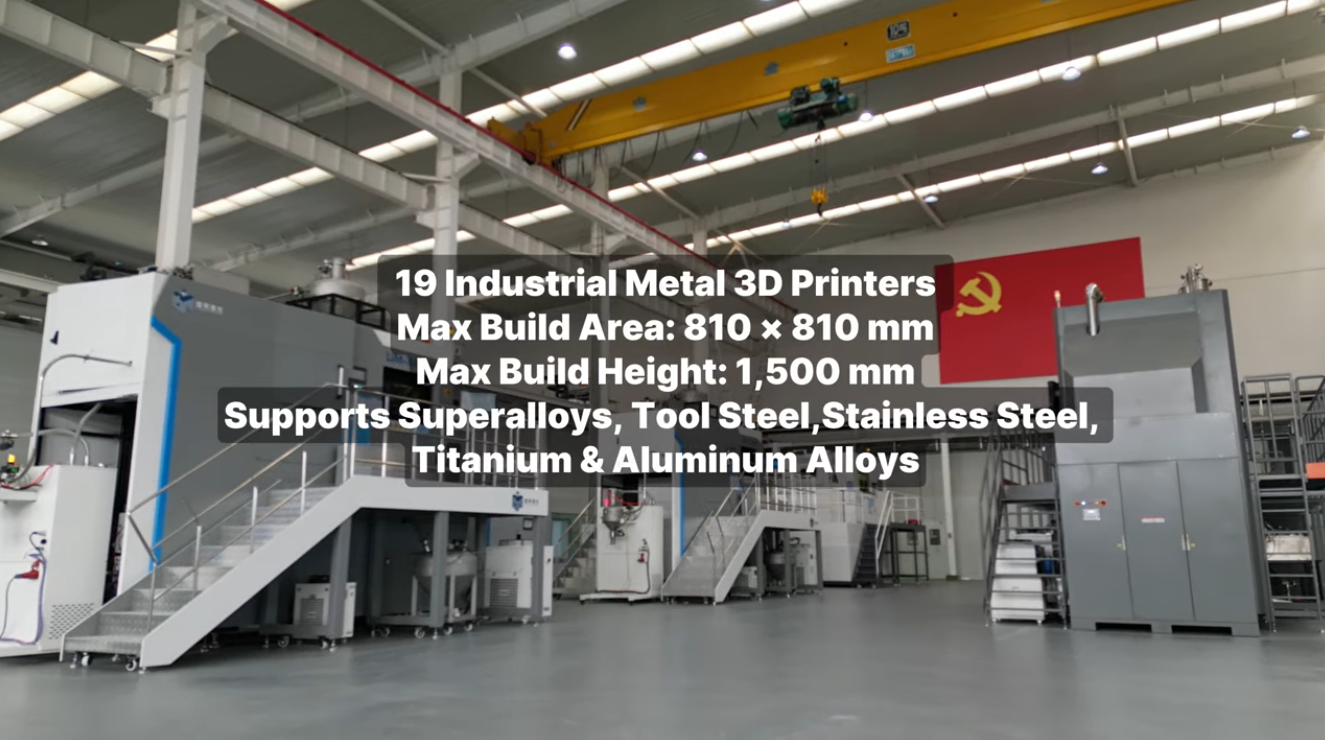
In an interview with 3D Printing Industry at Formnext Asia Shenzhen, VMP Overseas Sales Director Robin Sun said Jiangsu Vilory Advanced Materials produced more than 3,000 tonnes of metal powder in 2025 and expects to double capacity by the end of 2026. The company operates more than 30 production lines and plans to add about 30 more. It also aims to raise exports from roughly 10% of its business to 50% within five years.
VMP's Phase IV expansion targets 10,000 tonnes of additional annual capacity: 3,000 tonnes of titanium, 5,000 tonnes of copper, and 2,000 tonnes of aluminum powders. These are planned capacities, not confirmed output, and not all material will necessarily serve additive manufacturing. VMP says its powders cost about 60–70% as much as comparable US or European products, but the comparison is not fully defined, and tariffs, freight, customs, distribution, and testing can narrow the delivered-price gap.
Sun emphasized quality and stability over price and acknowledged that some VMP materials do not yet match certain US or European brands. Aerospace and other qualified applications depend on repeatable particle size, chemistry, oxygen content, and flowability as well as qualification history and traceability. Capacity expansion is clear, but recurring international orders are not guaranteed; the export target and price advantage remain company projections.
Key facts
- VMP says it produced more than 3,000 tonnes of metal powder in 2025.
- It operates more than 30 production lines and plans to add about 30 more.
- Phase IV targets 10,000 tonnes of annual capacity: 3,000 titanium, 5,000 copper, and 2,000 aluminum.
- The goal of raising exports from about 10% to 50% within five years is a VMP projection.
Context
Chinese powder producers are moving from domestic scale-up toward export competition, but adoption will depend less on quoted price than on qualification, batch consistency, and supply history.