Blue Origin Unveils Northstar Engine With More Than 65% Additive Mass
Blue Origin has introduced the 3,181 kN LOX/LNG Northstar booster engine, saying additive manufacturing accounts for more than 65% of its mass and cuts mass by 30% and parts count by 50% versus BE-4. It remains in development testing.
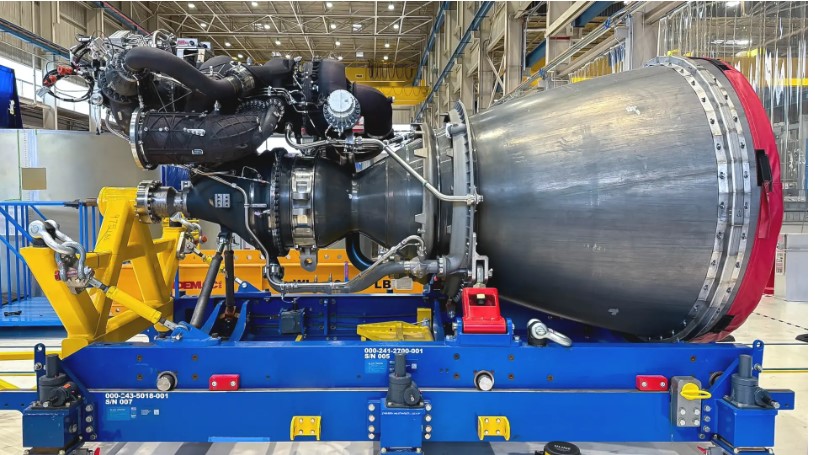
Blue Origin has introduced Northstar, a reusable booster engine using liquid oxygen and liquefied natural gas. Rated thrust is 715,000 lbf (3,181 kN), up from 640,000 lbf for BE-4. The company says in-house large-scale additive manufacturing produces more than 65% of the engine by mass, while reducing mass by 30% and parts count by 50% relative to BE-4. It also claims final assembly can be completed in less than one day.
Northstar retains Blue Origin's LNG-fueled oxygen-rich staged-combustion cycle and single-shaft turbopump architecture. The company says the program moved from approval to development testing in 11 months, but it has not announced a first-flight date. Blue Origin also has not identified the printed components, AM processes, alloys or durability-test results, so the mass, parts and assembly figures remain manufacturer-reported claims.
Key facts
- Rated thrust is 715,000 lbf (3,181 kN)
- Blue Origin says more than 65% of engine mass is additively manufactured
- The company claims 30% lower mass, 50% fewer parts and final assembly in under one day versus BE-4
Context
Northstar positions additive manufacturing as a primary design and production method for a large booster engine, although flight demonstration and reusable-life validation remain ahead.