Researchers laser-sinter binder-free lunar regolith simulant into reconfigurable blocks
A team led by the University of Arkansas has laser-sintered LHS-1 lunar regolith simulant without binders into cross- and H-shaped reconfigurable blocks. Cube specimens reached about 3.4 MPa peak compressive strength.
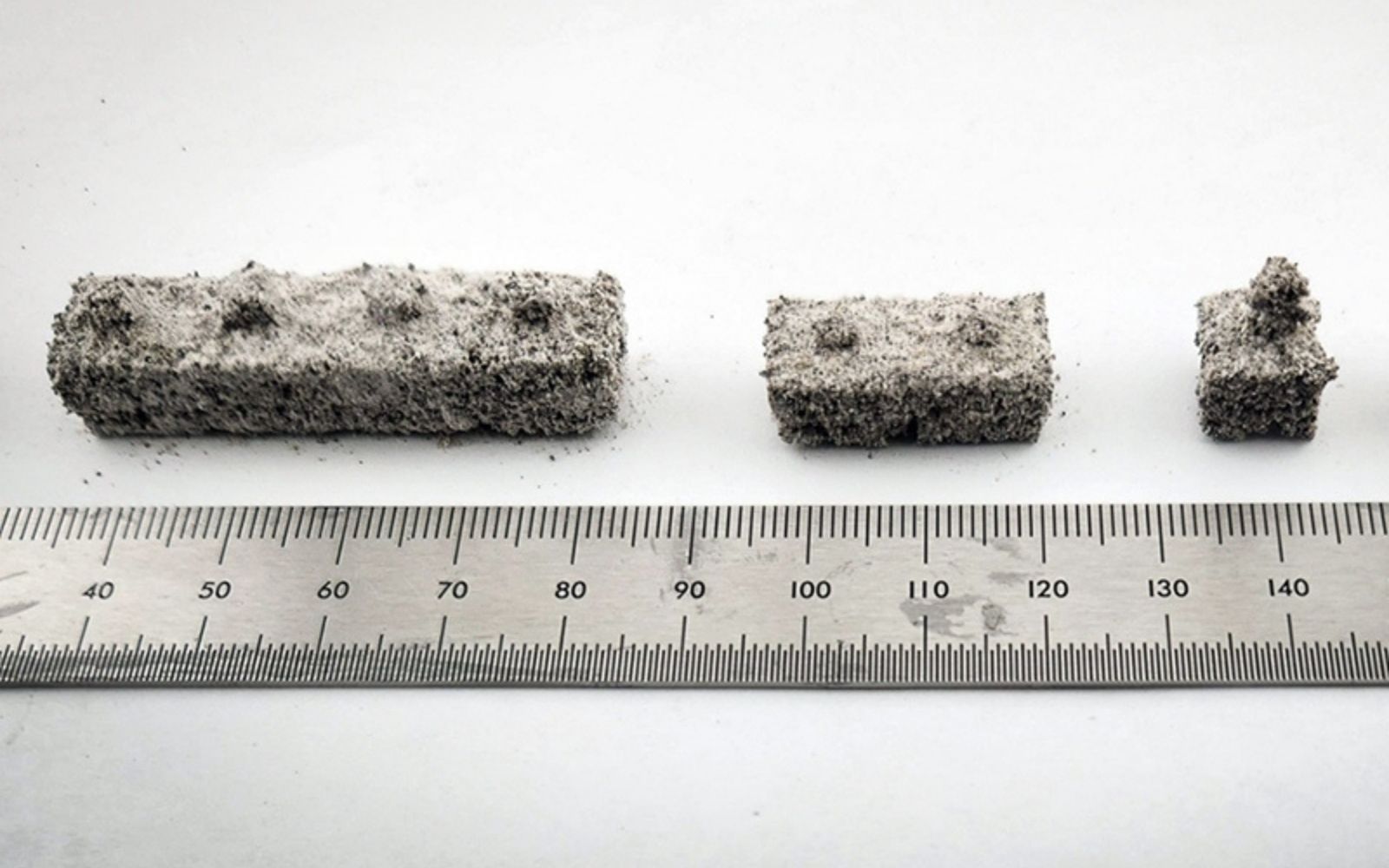
Researchers from the University of Arkansas, University of Houston and Tampere University used laser powder-bed fusion/direct sintering to process LHS-1 lunar regolith simulant without a binder. They produced cross- and H-shaped interlocking blocks a few centimeters wide. The study appears in npj Advanced Manufacturing.
The reconfigurable geometries can connect without adhesive and are intended as reusable elements for lunar construction concepts. Sintered cube specimens reached roughly 3.4 MPa peak compressive strength, but the parts remained porous. The work demonstrates self-supporting elements, not load-bearing habitat structures.
Printing under vacuum and reduced gravity has not yet been tested. The researchers identify further optimization of laser parameters and geometry as necessary.
Key facts
- Material: LHS-1 lunar regolith simulant
- Process: binder-free direct laser sintering
- Geometry: interlocking cross- and H-shaped blocks
- Peak compressive strength: about 3.4 MPa in cube specimens
- Vacuum and reduced-gravity printing remain untested
Context
The work demonstrates a route to reconfigurable components made from local material, but environmental testing and higher strength are essential before lunar structural use.