FibreSeeker 3 review finds strong continuous-carbon performance but glass-fibre issues
3D Printing Industry tested the $3,499 FibreSeeker 3 continuous-fibre printer, praising its carbon-fibre output and repeatability while flagging glass-fibre jams and a slow workflow.
In an independent review, 3D Printing Industry tested the FibreSeeker 3 for several weeks. The $3,499 machine combines FFF with continuous-fibre co-extrusion (CFC), offers a 300 × 300 × 245 mm build volume, and uses separate 0.4 mm FFF and 0.7 mm CFC nozzles.
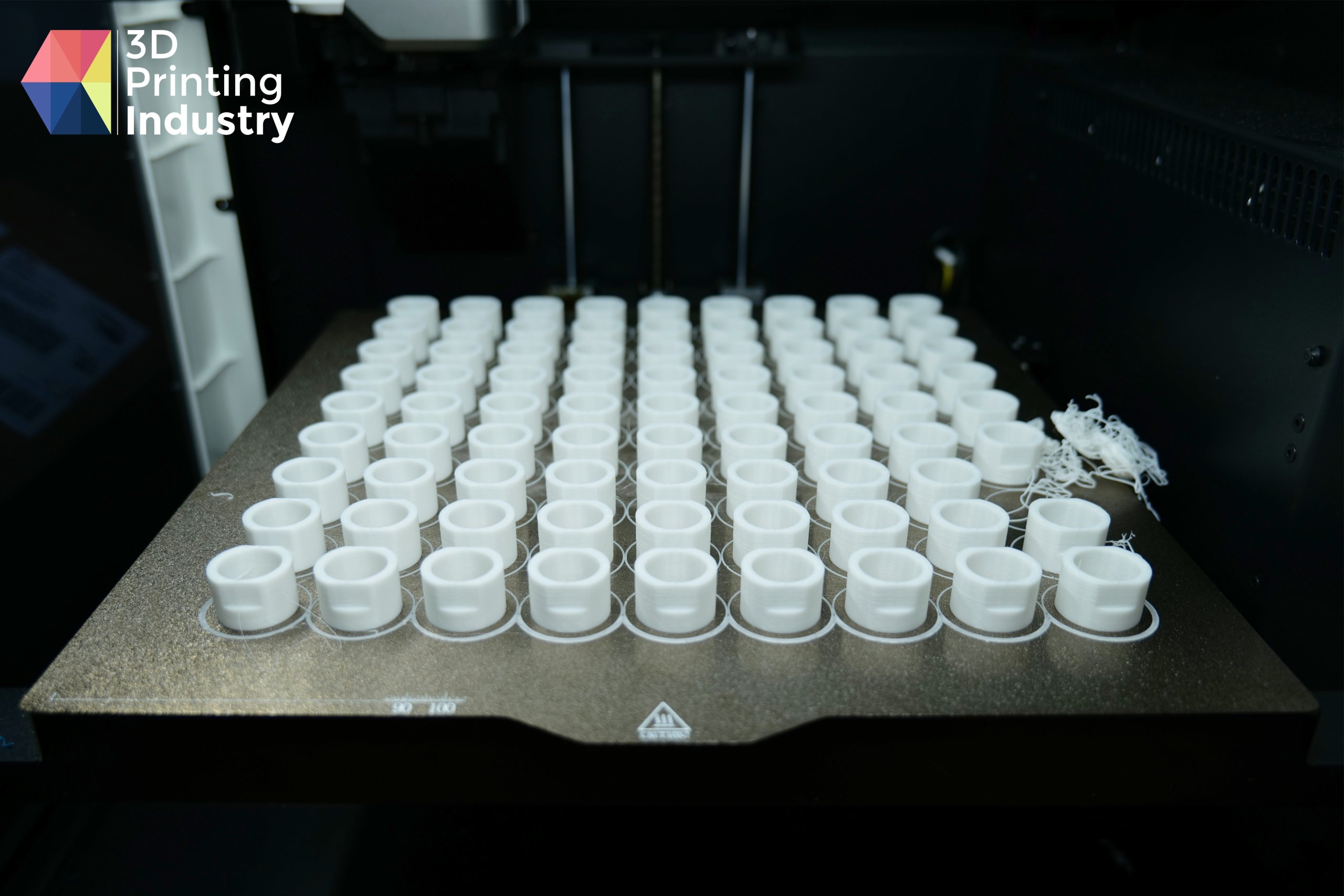
PETG repeatability tests returned a 0.048 mm mean deviation and 0.016 mm standard deviation. A 150-cylinder run produced Cp 4.91 and Cpk 1.83, while a 100 mm circle printed as much as 0.228 mm oversize on Y. The overall 3DPI benchmark score was 67.29. These dimensional results mainly cover the FFF nozzle and should not be treated as identical to reinforced-print accuracy.
Continuous carbon-fibre parts printed well, although automatic reinforcement missed a high-load region on one drone frame. Continuous glass fibre repeatedly jammed and struggled with tight turns. The reviewers also recorded roughly 20 minutes of calibration before each print, failed network transfer and chamber-overheat warnings. They recommend the machine for carbon-fibre users willing to accept a slower workflow, but advise glass-fibre-dependent buyers to wait for fixes.
Key facts
- Price: $3,499
- Build volume: 300 × 300 × 245 mm
- PETG repeatability: 0.048 mm mean deviation, 0.016 mm standard deviation
- 3DPI benchmark: 67.29
- Repeated continuous-glass-fibre nozzle jams were observed
Context
It lowers the entry price for continuous-carbon-fibre printing, but buyers need to assess material-specific reliability and software maturity.