Three Gorges Project Targets In-Situ AM Repair of 10-Meter-Class Seal Rings
China Yangtze Power awarded Dongfang Electric Machinery a reported RMB 15.8 million, 29-month contract covering turbine seal rings from 8.4 to 10.9 meters.
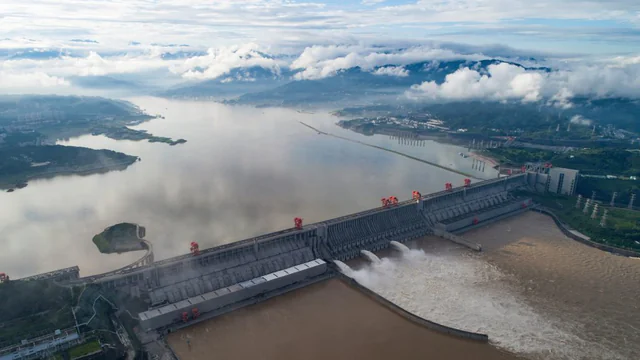
3D Printing Industry reported on October 22, 2026 that China Yangtze Power had awarded Dongfang Electric Machinery a contract to develop in-situ additive repair technology for turbine runner seal rings at the Three Gorges hydropower station. The reported value is RMB 15.8 million, approximately US$2.36 million, over 29 months. The scope covers seal rings from 8.4 to 10.9 meters in diameter across eight generator types under tender T261100130982.
The conventional response to a failed ring is to manufacture a replacement, transport it to the dam, heat-fit it onto the runner and machine it to final dimensions. This second development phase instead targets on-site metal deposition on the worn surface. The planned system includes modular load-bearing structures, multiple deposition units, control software, online monitoring, stress-relief and dust-purification equipment, together with deformation simulation, path planning, defect suppression, microstructure control and residual-stress management.
This is a technology-development and equipment-prototyping contract, not a completed repair. A first-phase feasibility study concluded that in-situ AM was technically feasible, but the source does not report a full-scale additive repair at Three Gorges. Validation is expected to include mechanical testing, nondestructive inspection, dimensional checks and residual-stress analysis by a third party holding valid CMA certification. Whether the system can be validated across eight turbine types within 29 months remains to be demonstrated.
Key facts
- Reported contract value: RMB 15.8 million (about US$2.36 million)
- Development period: 29 months
- Target diameter: 8.4–10.9 meters
- Scope: upper and lower seal rings across eight generator types
- Validation: mechanical, nondestructive and dimensional testing plus residual-stress analysis
- Status: phase-two technology and equipment development; no completed full-scale repair reported
Context
If validated, repairing 10-meter-class components in place could reduce transport, machining and turbine downtime, but the benefit depends on successful full-scale testing.