Machine-Learning Model Predicts Four Properties of WAAM ER5356
Researchers built a model to jointly predict tensile strength, elongation, flexural strength and hardness for circular-path WAAM ER5356 aluminum. One confirmation build fell within 1.18–4.61% of the predictions.

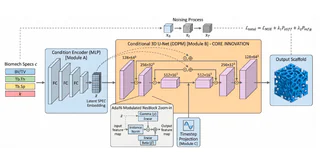
A Scientific Reports study used 30 circular-path ER5356 aluminum builds made by CMT-WAAM, varying wire feed from 7.5–9.5 m/min, travel speed from 6–10 mm/s, interpass temperature from 80–160°C and gas flow from 12–18 L/min. A stacked model using physics-guided descriptors returned R² values of 0.7799–0.8599 across four properties.
A confirmation build selected from 50,000 parameter combinations measured 288.90 MPa tensile strength, 38.25% elongation, 385.60 MPa flexural strength and 70.95 HV, within 1.18–4.61% of predictions. It was a single validation build; fatigue, corrosion, residual stress and porosity were not optimized, and use outside the tested range remains unvalidated.
Key facts
- The dataset contained 30 builds
- R² across four properties ranged from 0.7799 to 0.8599
- The confirmation build differed from predictions by 1.18–4.61%
Context
The method could accelerate multi-property WAAM parameter selection, but the small dataset and single confirmation build require further validation before production use.