Hydra CHAMP detects, mills and reprints defective ceramic layers
Hydra Manufacturing’s CHAMP combines ceramic paste extrusion, infrared drying, machining and vision inspection. In published tests, reworked specimens showed 68% less void content than uncorrected controls.
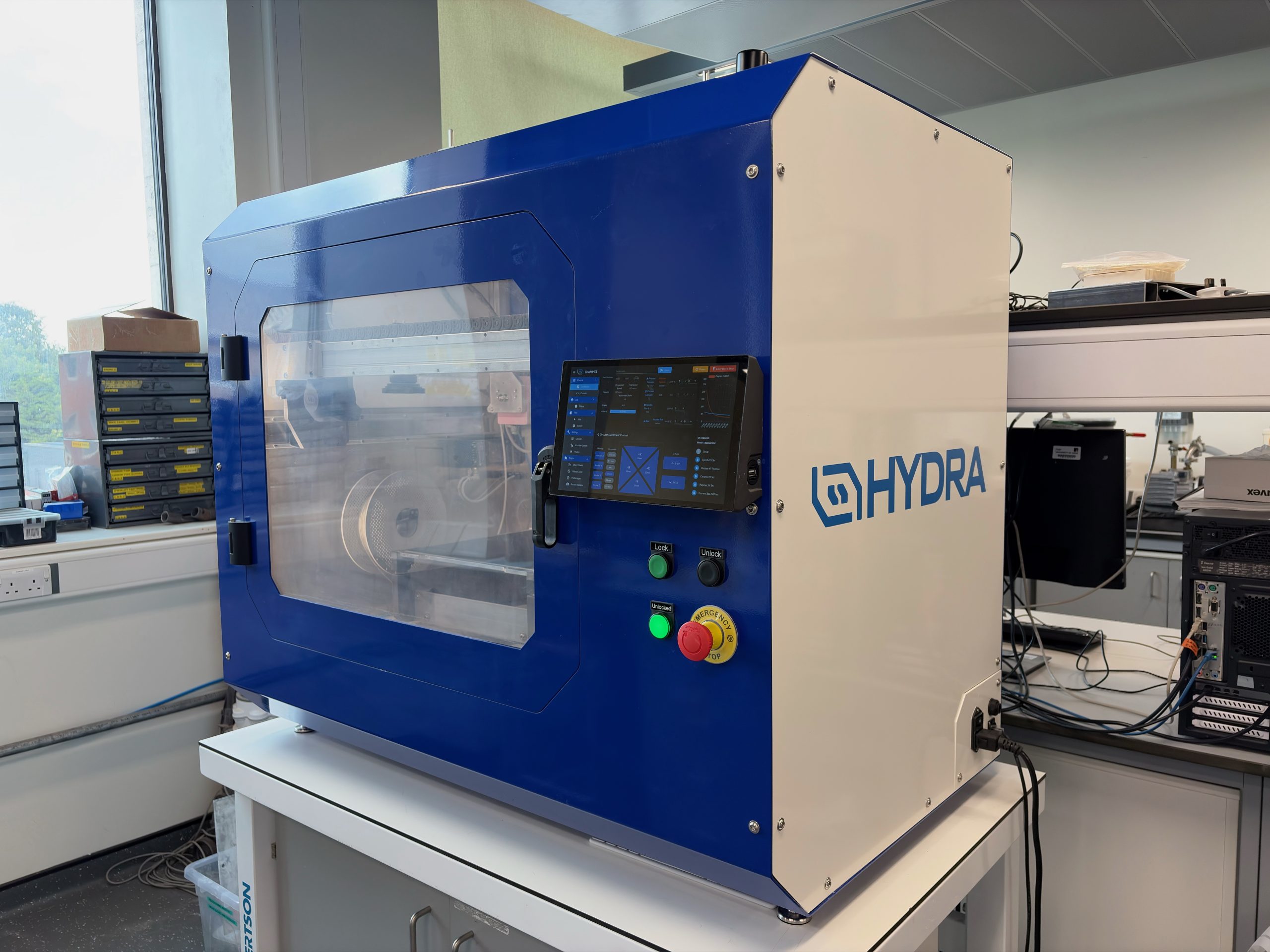
University of Leeds spin-out Hydra Manufacturing is commercialising CHAMP, a hybrid system for technical ceramics. It combines paste extrusion, infrared drying, machining and vision inspection. When the camera detects excess or missing material, the spindle can trim a layer to a reference height or remove the defective layer so the machine can print it again.
Independent reporting by 3D Printing Industry says the research team manually labelled thousands of defect images. Tests published in Additive Manufacturing found 68% lower void content in reworked specimens than in uncorrected controls. The result applies to those specimens only and does not guarantee performance for a customer’s different material, geometry or tolerance.
CHAMP machines the weaker green body before sintering to reduce expensive finishing after firing. For lower-binder feedstocks, Hydra describes overnight drying followed by an 18-hour debinding and sintering cycle, or about 24 hours including cooldown. The first machine went to Lucideon, but fired dimensional accuracy is still being validated across geometries, and Hydra’s silicon-carbide formulation was still awaiting final qualification at the time of the interview.
Key facts
- CHAMP integrates paste extrusion, infrared drying, machining and vision inspection.
- It can remove a defective layer, adjust extrusion and print it again.
- Published tests reported a 68% reduction in void content for reworked specimens.
- The first machine was supplied to Lucideon.
- Fired tolerances and the silicon-carbide formulation remain under validation or qualification.
Context
In-process defect correction could reduce scrap and post-sinter machining for ceramics, but each customer material still requires validation.